

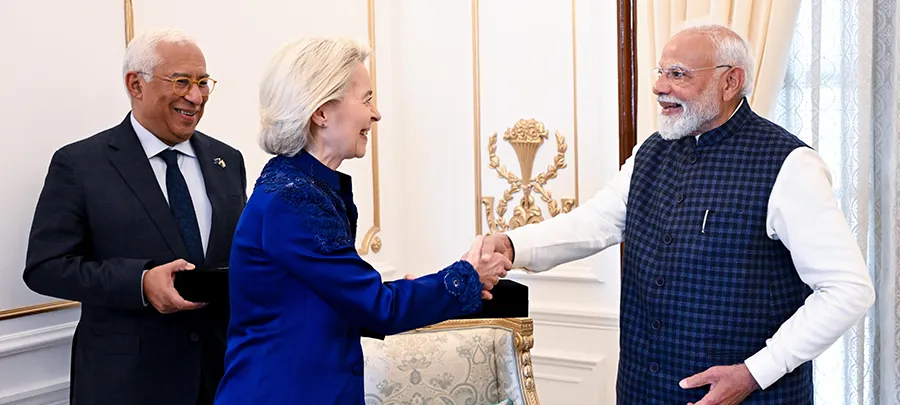
In late January 2026, the European Union and India signed a historic Free Trade Agreement (FTA) — widely dubbed the “mother of all trade deals.” This landmark pact dramatically reshapes commercial ties between the EU’s 27 member states and India’s 1.45 billion consumers, with major implications for the food and beverage sector.
Why This Matters for Food Producers and Exporters
For food producers in the EU, one of the biggest barriers to entering the Indian market has been high tariffs — in some cases averaging 36 % or more on agricultural products and reaching up to 150 % on items such as wine, spirits and processed foods.
Under the new agreement:
-
Tariffs on many EU agrifood exports will be significantly reduced or eliminated, providing vastly improved access to India’s food market.
-
Olive oil and vegetable oils may become tariff-free within a few years.
-
Processed foods like pasta, chocolate, bread and pastries are expected to benefit from zero duties.
- Wine tariffs could be cut from 150 % down to as low as 20 % over time.
This opens up new demand opportunities for EU farmers, food manufacturers and exporters across a spectrum of products that previously faced prohibitive export taxes. In 2024, EU agrifood exports to India were only about €1.3 billion — just a fraction of the EU’s total agrifood trade — illustrating a largely untapped potential market.
Reduced Tariffs = Lower Costs + Stronger Competitiveness
Lower tariffs mean direct cost savings for EU exporters. With duties slashed, European producers can price their products more competitively in India — an especially powerful advantage in categories like premium wines, spirits, processed goods and niche agricultural products.
Beyond prices, reduced taxes help:
-
Expand market share by making European brands more affordable for Indian consumers.
-
Encourage higher export volumes over time, as businesses scale production to meet new demand.
-
Attract Indian distributors and retailers interested in European quality products at improved price points.
In broader terms, this tariff overhaul could contribute to doubling EU exports to India by 2032, helping to rebalance global trade flows and reduce dependency on other markets — a strategic benefit noted by EU leaders.
You can read a BestFoodImporters analysis of the Indian market here.
What This Means for European Food Sectors
From Mediterranean olive oil to premium spirits and artisan chocolates, EU food producers stand to win:
-
Processed foods: Products like pasta, pastries and chocolates see duty elimination, which can widen distribution in India.
-
Fruit and olives: Kiwis, pears and other fruit categories benefit from quota opportunities and lower import duties.
These changes will likely accelerate brand awareness and adoption of European food products across urban and increasingly affluent Indian consumer segments.
Tariff Cuts:
Olive oil:
• Current tariffs around 45 %
• Reduced to zero within about five years.
Processed foods (e.g., bread, confectionery, chocolates, pasta):
• Tariffs eliminated or cut by up to ~50 % or more, often reaching zero for key EU food products.
Average on EU agri-food exports:
• Many food items in India had prohibitive duties averaging 36 % or higher — these will be either removed or significantly reduced under the FTA.
How Lower Tariffs Help Trade and Imports
The core economic logic of the FTA is simple: lower tariffs reduce the cost of cross-border trade, leading to:
-
More competitive pricing for imported products.
-
Increased consumer choice with access to a wider variety of foods.
-
Higher trade volumes due to stronger economic incentives.
For Indian market stakeholders, this means European imports such as olive oil, wine, processed snacks and specialty beverages become both more attractive and more affordable — potentially expanding the imported food segment significantly.
Moreover, with simplified customs procedures and aligned regulatory cooperation, the whole export and import process becomes smoother, reducing administrative friction that once held back trade flows.
How BestFoodImporters Can Help Your Business Benefit
At BestFoodImporters, we specialize in connecting food producers and exporters with global markets — and this EU–India FTA creates one of the most exciting opportunities in recent decades.
BestFoodImporters has deep networks with distributors, importers, and retail partners in key regions and can help you:
- Identify verified food importers in India
- Filter companies by product focus, portfolio, and origin
- Access direct contact details of buyers and decision-makers
- Discover importers already working with European producers
- Track new leads as the Indian market opens further
Conclusion: A New Era for EU–India Food Trade
The EU–India Free Trade Agreement represents a transformational moment for food producers in the EU and importers in India. By reducing trade barriers, lowering tariffs, and expanding access to one of the world’s fastest-growing food markets, this deal unlocks substantial opportunities for growth.
For European food producers looking to expand into India, now is the time to act — and BestFoodImporters is your strategic partner in success.
Image: © European Union, 202X, licensed under CC BY 4.0
