

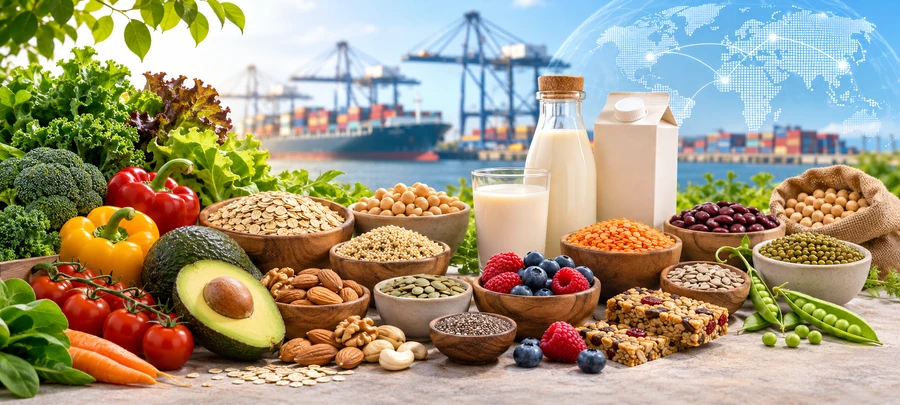
The global food industry is undergoing a significant transformation as consumers become more selective about what they eat, how their food is produced, and the nutritional benefits it offers.
Find food buyers for your products
Research importers, review company profiles and explore available purchasing contacts.
No credit card. Full access requires a subscription.
Plant-based foods, organic products, high-protein snacks, functional beverages, gluten-free alternatives, and products with simpler ingredient lists are becoming increasingly important across international markets. Once largely associated with specialized health food stores, many of these products are now part of mainstream supermarket offerings.
For food manufacturers and exporters, this evolution creates opportunities to enter new markets, diversify their customer base, and develop relationships with specialized importers and distributors.
However, the market is also becoming more mature. Consumers are increasingly demanding products that combine health benefits with good taste, convenience, quality, and competitive pricing. Simply labeling a product as vegan, natural, or healthy is no longer enough.
The Global Plant-Based and Health Food Market in Numbers
According to the Good Food Institute’s 2026 State of the Industry Report, global retail sales of plant-based meat, seafood, milk, yogurt, ice cream, and cheese reached an estimated $28.9 billion in 2025, increasing by 3% compared to the previous year.
The estimated regional distribution of sales highlights several important markets:
| Region | Plant-based retail sales in 2025 |
|---|---|
| Europe | $10.1 billion |
| Asia-Pacific | $9.2 billion |
| North America | $6.9 billion |
| Latin America | $1.7 billion |
| Middle East and Africa | $1.1 billion |
The broader organic food market is also showing resilience. According to the 2026 edition of The World of Organic Agriculture, published by FiBL and IFOAM, global organic food and drink sales reached a record €145 billion in 2024, an increase of €6.9 billion compared to 2023.
Even more relevant for exporters, combined organic imports into the European Union and the United States reached 5.9 million metric tons in 2024, increasing by 12.3%.
These figures indicate substantial opportunities for international suppliers of both finished food products and ingredients.
However, not all categories are performing equally well. While organic products, protein-rich snacks, and certain dairy alternatives continue to offer attractive opportunities, plant-based meat substitutes are experiencing challenges related to pricing, taste, nutritional perception, and repeat purchases.
For exporters, understanding these differences is essential when selecting products and target markets.
The Most Promising Product Categories for Food Exporters
1. High-Protein Foods and Snacks
Protein has become one of the most important drivers of food innovation, extending well beyond the traditional sports nutrition market.
Products that were previously targeted primarily at athletes are increasingly being purchased by mainstream consumers looking for convenient and nutritious options.
In a November 2026 survey published by the International Food Information Council (IFIC), approximately half of American consumers reported actively trying to consume protein.
Attractive product categories include:
- Plant-based protein bars and snacks
- Protein-enriched cereals and granola
- High-protein pasta and bakery products
- Chickpea, lentil, and pea-based snacks
- Ready-to-drink protein beverages
- Plant-based protein powders
- Nuts, seeds, and nut butters
One particularly interesting development is the integration of protein into familiar everyday products. A manufacturer does not necessarily need to develop an entirely new product range. Reformulating existing biscuits, crackers, pasta, or snacks may create access to new distribution channels.
According to the Good Food Institute, US retail sales of plant-based bars increased by 16% in 2025, making them one of the strongest-performing categories in its plant-based retail dataset.
2. Plant-Based Dairy Alternatives
Plant-based milk remains one of the most established segments of the alternative food industry.
In the United States alone, retail sales of plant-based milk reached approximately $2.7 billion in 2025, representing 13% of total retail milk sales by value, according to GFI’s market research.
Although overall US plant-based milk sales declined slightly, opportunities continue to exist in differentiated products and formats.
Products worth exploring include oat, almond, soy, coconut, and other plant-based beverages, barista milk alternatives, dairy-free desserts, plant-based creamers, yogurts, and fortified beverages.
The foodservice sector is particularly interesting for manufacturers producing barista-style beverages. Coffee shops, hotels, restaurants, and catering companies represent a distribution channel that extends beyond traditional vegan and health food retailers.
Shelf-stable products may also offer logistical advantages for exporters targeting distant markets.
3. Organic Food Products
Organic food remains one of the more established and internationally recognized segments of the health food industry.
The Organic Trade Association’s 2026 Organic Market Report revealed that US sales of certified organic products, including food and non-food products, reached $76.6 billion in 2025, growing by 6.8%.
The category offers opportunities for a wide range of producers, including manufacturers that do not specialize exclusively in health food.
Products with export potential include organic olive oil, coffee, tea, spices, honey, dried fruit, nuts, cereals, pulses, fruit juices, chocolate, snacks, sauces, and baby food.
Organic certification can help producers differentiate their products, enter premium retail channels, and access specialized distributors.
However, certification alone is not enough. Exporters must also ensure that their certification is recognized in the destination market and that their prices remain competitive.
4. Functional Foods and Beverages
Consumers are increasingly interested in products positioned around specific nutritional or wellness benefits, including digestive health, hydration, energy, and active lifestyles.
An August 2026 survey by IFIC found that nearly two-thirds of American consumers considered gut health a priority.
This creates interesting opportunities for manufacturers of fiber-rich snacks, fermented foods, probiotic beverages, kombucha, fortified juices, electrolyte beverages, and functional teas.
For exporters, functional beverages can be particularly attractive because they combine innovation with multiple potential sales channels, including supermarkets, gyms, convenience stores, online retailers, and specialty distributors.
However, manufacturers must pay close attention to local regulations regarding nutrition and health claims. A claim permitted in one country may require authorization or different wording in another.
5. Low-Sugar, Gluten-Free and Clean-Label Products
The health food market is increasingly moving toward products that offer familiar tastes with improved nutritional profiles or ingredients that respond to specific dietary preferences.
Research published by IFIC in November 2026 found that 17% of Americans were trying to avoid sugars entirely, the highest percentage recorded in its ten-year tracking period.
This creates opportunities for manufacturers of reduced-sugar confectionery, lower-sugar beverages, fruit-based snacks, gluten-free bakery products, wholegrain foods, and products with shorter, more recognizable ingredient lists.
For established food manufacturers, this trend can represent an opportunity to extend existing product ranges rather than develop entirely new brands.
Importers that already distribute conventional snacks, beverages, bakery products, and confectionery may also be interested in healthier alternatives that complement their portfolios.
6. Plant-Based Meat Alternatives and Naturally Plant-Based Foods
Plant-based meat remains a significant international food category, but the market has become more challenging.
Global retail sales of plant-based meat and seafood reached an estimated $6.6 billion in 2025. In the United States, however, sales of these products declined by 10% in value compared to 2024.
The opportunity for exporters is therefore becoming more selective.
Instead of focusing exclusively on products designed to imitate meat, manufacturers should also consider naturally plant-based products such as tofu, tempeh, falafel, hummus, vegetable-based ready meals, lentil dishes, and pulse-based products.
These products can appeal to consumers who are looking for plant-based options but prefer familiar ingredients, traditional recipes, or products that are less dependent on meat imitation.
Manufacturers of Mediterranean, Middle Eastern, and Asian foods may be particularly well positioned to explore this opportunity.
The Best Markets for Plant-Based and Health Food Exports
Germany
Germany remains one of the most attractive markets for organic, vegan, and health food exporters.
According to GFI Europe’s latest retail sales analysis, German retail sales across the tracked plant-based food categories reached approximately €1.71 billion in 2025, increasing by 3.1% in value and 6.2% in volume.
Germany was also the world’s second-largest organic food market in 2024, with sales of €17 billion.
The country’s well-developed organic retail sector, extensive supermarket networks, discounters, drugstores, and specialized distributors create multiple entry points for international manufacturers.
Promising products: Organic snacks, plant-based beverages, vegan ready meals, gluten-free products, protein-rich foods, organic ingredients, and private-label products.
Exporters should be prepared for demanding certification requirements, competitive pricing, and strong expectations regarding product quality and supply reliability.
United States
The United States remains one of the largest commercial opportunities for health food manufacturers.
US retail sales of plant-based foods reached $7.9 billion in 2025. Approximately 60% of American households purchased products from the plant-based categories tracked by GFI during the year.
An important insight for exporters is that 96% of households purchasing plant-based meat and seafood also purchased conventional meat.
This demonstrates that the market extends far beyond strictly vegan consumers.
Promising products: Organic foods, high-protein snacks, functional beverages, gluten-free bakery products, specialty nut products, plant-based dairy alternatives, and reduced-sugar foods.
The market is highly competitive, making specialized natural food distributors, regional importers, and premium grocery suppliers potentially valuable partners for smaller international brands.
France
France has become one of the most interesting European markets for plant-based food producers.
Retail sales across the plant-based categories tracked by GFI Europe increased by 11.4% in value in 2025, reaching approximately €572 million. Sales volumes grew by 13%.
This was the strongest percentage increase in sales value among the six European countries included in GFI Europe’s latest analysis.
Promising products: Plant-based dairy alternatives, organic biscuits, premium healthy snacks, naturally plant-based ready meals, fruit-based products, and organic specialty foods.
French consumers’ appreciation for taste and culinary quality means that producers should focus on the overall food experience, rather than relying exclusively on health or sustainability messages.
United Kingdom
The United Kingdom remains a substantial market for vegan, vegetarian, free-from, and health food products, although competition has intensified.
Plant-based retail sales across the categories monitored by GFI Europe reached approximately £-equivalent €993 million in 2025, down 1.2% compared to 2024.
The country nevertheless offers a developed distribution infrastructure, including specialized health food retailers, online stores, mainstream supermarkets, and private-label suppliers.
Promising products: High-protein snacks, free-from products, vegan confectionery, oat-based beverages, functional drinks, and private-label health foods.
Exporters should pay particular attention to differentiation, retail pricing, packaging, and post-Brexit import requirements when applicable.
Spain and Italy
Spain and Italy are attractive markets that may sometimes be overlooked by producers focusing primarily on Germany and the United Kingdom.
In 2025, plant-based retail sales increased by 7.7% in Spain and 4.5% in Italy across the categories tracked by GFI Europe.
Both countries have strong culinary traditions built around many naturally plant-based ingredients, including vegetables, legumes, nuts, cereals, and olive oil.
Promising products: Plant-based beverages, vegetable-based meals, healthy pasta alternatives, organic ingredients, pulse-based snacks, and Mediterranean health food products.
Products that combine modern nutritional positioning with familiar culinary traditions may be particularly interesting for these markets.
Japan
Japan offers attractive opportunities for producers of premium health foods, functional beverages, and specialized food ingredients.
According to the USDA’s 2026 Food Processing Ingredients Annual report for Japan, the Japanese food processing sector was valued at approximately $174 billion in 2025. Despite an overall contraction, health foods, soft drinks, frozen foods, and shelf-stable products were among the growing segments.
Japan also has an established culinary tradition of consuming soy-based and naturally plant-based foods.
Promising products: Functional beverages, fermented foods, protein-enriched products, organic tea, nuts, specialty ingredients, and premium healthy snacks.
Success in Japan often requires excellent product consistency, detailed documentation, attractive packaging, and a reliable local distribution partner.
Singapore
Singapore is an interesting destination for premium health food manufacturers looking to enter Southeast Asia.
According to an August 2026 USDA market analysis, opportunities exist for international suppliers of premium, health-oriented, and convenient food products.
Singapore’s sophisticated retail infrastructure, dependence on imported food, international population, and developed hospitality sector make it an attractive market for testing new products.
Promising products: Functional beverages, premium organic products, healthy snacks, plant-based dairy alternatives, gluten-free foods, and specialty ingredients.
Importers with regional distribution networks may also provide access to additional Southeast Asian markets.
United Arab Emirates and the Gulf Region
The UAE, Saudi Arabia, Qatar, and Kuwait deserve consideration from exporters of premium and health-oriented foods.
Modern retail infrastructure, international consumer communities, hospitality, fitness-related businesses, and premium supermarkets create potential distribution opportunities.
Promising products: Organic foods, protein snacks, healthy confectionery, functional beverages, plant-based milk, date-based products, nuts, and gluten-free foods.
Dubai is particularly interesting as a regional food trading hub, with some importers distributing products across several Gulf countries.
Exporters should evaluate local labeling requirements, halal requirements where applicable, shelf life, and the suitability of their products for local consumer preferences.
Key Trends Shaping the Health Food Industry in 2027
Moving Beyond the Vegan Consumer
One of the most important developments in the plant-based industry is the growing importance of consumers who still eat animal products but want to introduce more plant-based options into their diets.
These consumers are commonly referred to as flexitarians.
For manufacturers, this means that marketing a product exclusively as vegan may unnecessarily limit its potential audience.
A chickpea-based snack can appeal to someone looking for protein. An oat beverage can appeal to coffee enthusiasts. A lentil-based ready meal can appeal to consumers looking for convenience and variety.
The nutritional benefit, taste, and practical use of a product can be as important as its plant-based positioning.
Taste and Price Are Becoming More Important
The initial novelty surrounding many plant-based products has diminished.
Consumers are increasingly comparing them with conventional alternatives in terms of taste, texture, price, nutritional value, and convenience.
GFI Europe’s 2026 analysis found that the narrowing price difference between plant-based and conventional products was associated with increasing sales volumes in several European markets.
For exporters, this means that competitive production costs and efficient logistics are becoming increasingly important.
A product that is successful in its domestic market may become too expensive after transportation, import duties, distributor margins, and retailer margins are added.
Understanding the final retail price before approaching importers is essential.
Private Label Is an Attractive Growth Channel
Retailers looking to expand their organic, vegan, and health food ranges may not always want to introduce another independent brand.
Instead, they may prefer to work with manufacturers capable of producing private-label products.
This creates opportunities for producers of healthy snacks, plant-based beverages, organic cereals, gluten-free bakery products, protein bars, and ready meals.
For manufacturers with competitive production costs, recognized food safety certifications, and flexible packaging capabilities, private label can be an effective way to enter large international markets.
Simpler Ingredients and Transparent Product Positioning
As consumers become more interested in how their food is produced, manufacturers are facing greater scrutiny of ingredient lists and nutritional profiles.
This is particularly relevant for plant-based products, which are sometimes perceived as being highly processed.
Producers that can develop products with recognizable ingredients, attractive nutritional profiles, and clear labeling may have an advantage when approaching specialized importers.
It is also important to remember that plant-based, organic, natural, and healthy are not interchangeable terms. Each product needs a clear and credible positioning.
What Health Food Importers Look for in New Suppliers
Entering the international health food market requires more than an attractive product.
Importers and distributors need to understand whether a product can be sold profitably, whether it complies with local regulations, and whether the manufacturer can support a long-term commercial relationship.
Before approaching potential buyers, exporters should prepare:
- A professional product catalogue in English
- Detailed ingredient and nutritional information
- Allergen declarations and relevant certifications
- Wholesale and export price lists
- Minimum order quantities and production capacity
- Shelf-life and storage information
- Private-label capabilities, where available
- Product samples and high-quality packaging images
- Information about existing export markets and distribution agreements
Depending on the product and target market, certifications such as USDA Organic, EU Organic, BRCGS, IFS, FSSC 22000, vegan certification, gluten-free certification, halal, or kosher may be relevant.
Manufacturers should distinguish between legally required documentation and voluntary certifications requested by buyers.
Special attention should also be paid to nutrition and health claims. Terms such as high protein, low sugar, and source of fiber may be subject to specific legal conditions, including those established by EU regulations on nutrition and health claims.
How to Find Plant-Based, Organic and Health Food Importers
One of the biggest challenges for food exporters is not identifying attractive markets, but finding the companies that are actually importing and distributing their specific products.
A manufacturer of organic protein bars may have little success contacting a general food importer specializing in meat or dairy products. Similarly, a producer of plant-based beverages may need a different distribution partner from a manufacturer of vegan confectionery.
The more specialized the product, the more important buyer targeting becomes.
Potential business partners include organic food importers, natural food distributors, vegan food wholesalers, sports nutrition distributors, functional beverage importers, supermarket suppliers, foodservice distributors, and private-label sourcing companies.
Researching these companies individually through search engines, business directories, LinkedIn, and trade fair exhibitor lists can be a time-consuming process.
This is where BestFoodImporters can help.
Our dedicated Organic & Health Food Importers Database provides access to more than 11,500 companies operating in this sector worldwide.
Food producers and exporters can use the platform to:
- Identify importers and distributors in specific countries
- Search for companies based on particular products and keywords
- Research company profiles and business activities
- Access available purchasing managers’ contact details
- Evaluate potential partners using available financial information
- Build targeted prospect lists for international sales campaigns
- Discover newly added and updated companies
Instead of spending weeks manually searching for potential buyers, exporters can dedicate more time to presenting their products, negotiating commercial agreements, and building relationships with relevant companies.
A producer of oat milk, for example, could research beverage and health food importers in Germany, France, Japan, and the UAE. A manufacturer of organic protein bars could focus on natural food distributors, snack importers, and sports nutrition companies in the United States and Europe.
The ability to identify these different types of buyers is particularly valuable in a market where distribution channels are becoming increasingly specialized.
Conclusion
The global plant-based and health food industry continues to offer significant opportunities for food manufacturers and exporters, but the market is evolving.
While some categories are experiencing slower growth, others, including organic foods, protein-rich snacks, functional beverages, naturally plant-based foods, and products with improved nutritional profiles, remain attractive.
Success in 2027 will depend on understanding which products are gaining traction, selecting the right international markets, offering competitive prices, and identifying importers that serve the appropriate distribution channels.
For food exporters, the opportunity is not simply to participate in the health food trend. It is to find the right commercial partners that can turn consumer demand into sustainable international sales.
Looking for new customers for your plant-based, organic, or health food products? Explore the BestFoodImporters platform and start building your next international buyer list.
Start your free preview or explore our subscription options to access thousands of potential business partners worldwide.
